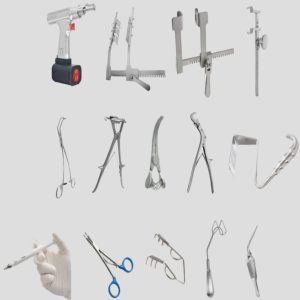



Stamping Process in Surgical Instruments Manufacturing
Stamping is a key metalworking process in the surgical instrument industry that involves shaping or forming stainless steel sheets or blanks into precise components using dies and high-pressure presses. It’s used to create consistent shapes, markings, and detailed contours required for functionality and brand identity.
Why Stamping is Important
Shape Formation
-
Converts flat stainless steel into 3D instrument components (e.g. retractor blades, scissor handles)
-
Allows mass production with high precision and repeatability
Part Number & Logo Marking
-
Used to stamp model numbers, sizes, “CE” marks, or “RIGOR INSTRUMENTS” branding directly on the tools
-
Ensures traceability, compliance, and professional finish
Structural Integrity
-
Precisely stamped parts have uniform thickness and dimensions
-
Reduces machining time and ensures fit accuracy during assembly
Types of Stamping Used by Rigor Instruments
| Type | Purpose |
|---|---|
| Blanking | Cuts flat metal shapes for further processing |
| Embossing | Adds raised markings/logos on the tool surface |
| Piercing | Makes precision holes and slots during forming |
| Coining | Adds fine text or numerical detail to surface |
| Bending/Forming | Shapes parts like clamps, scissors, retractors |
Stamping in Rigor Instruments Workflow
-
Die Design – Custom hardened steel dies created for each instrument model
-
Steel Preparation – 420 or 440C stainless blanks cleaned and aligned
-
High-Tonnage Presses – Mechanical or hydraulic presses apply up to 100+ tons force
-
Marking – CE, LOT numbers, sizes, or RIGOR branding stamped
-
Finishing – Deburring, polishing, and quality control
Risks of Poor Stamping
| Issue | Result |
|---|---|
| Misaligned stamps | Tools won’t fit or assemble properly |
| Weak embossed marks | Fades during sterilization or use |
| Burrs or rough edges | Risk of infection, discomfort, or contamination |