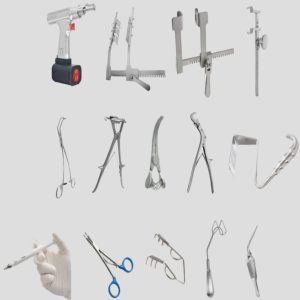


Types of Vaginal Speculums and Their Uses
1. Cusco’s Speculum (Self-Retaining)
-
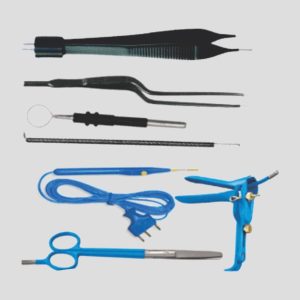
Design: The vaginal speculum is bivalve (duckbill shape), hinged in the center, opens like a beak.
-
Material: Stainless steel or plastic (disposable).
-
Use:
-
Routine pelvic examinations.
-
Pap smears.
-
Cervical inspection.
-
Intrauterine device (IUD) insertion.
-
Colonoscopy.
-
-
Advantage: Self-retaining, doesn’t require an assistant to hold.
2. Graves’ Speculum
-
Design: Bivalve with wider, curved blades than Cusco’s.
-
Use:
-
Suitable for parous women (those who’ve given birth).
-
Examination in obese patients.
-
Visualizing the vaginal walls and cervix.
-
3. Pederson Speculum
-
Design: Narrower blades compared to Graves’.
-
Use:
-
Ideal for nulliparous women or postmenopausal women with narrow vaginal canals.
-
Less traumatic for sensitive tissues.
-
4. Sims’ Speculum (Non-Self-Retaining)
-
Design: Single-blade, spoon-shaped.
-
Use:
-
Vaginal wall retraction.
-
Better access during surgeries (e.g., vaginal repair, prolapse).
-
Often used with an anterior vaginal wall retractor or tenaculum.
-
-
Advantage: Offers better visualization of the vaginal canal.
5. Auvard Weighted Speculum
-
Design: Heavy, single blade with weight to keep it in place.
-
Use:
-
Vaginal surgeries under anesthesia (e.g., hysterectomy).
-
Provides constant downward retraction.
-
-
Advantage: Hands-free due to weight.
6. Fergusson’s Speculum
-
Design: Tubular with no opening mechanism; simple cylinder.
-
Use:
-
Primarily for inspecting the vaginal canal or cervix.
-
Used in pediatric or postmenopausal women.
-
-
Advantage: Minimal discomfort, useful in sensitive cases.
7. Disposable Plastic Speculum
-
Design: Lightweight, single-use, usually similar to Cusco’s.
-
Use:
-
Pap smears and routine outpatient exams.
-
Clinics and mobile health camps.
-
-
Advantage: Hygienic, reduces cross-contamination.
Summary Table
| Speculum Type | Design | Key Uses | Self-Retaining |
|---|---|---|---|
| Cusco’s | Bivalve, hinged | Pap smears, IUDs, routine exams | Yes |
| Graves’ | Bivalve, wider blades | Parous women, better vaginal wall exposure | Yes |
| Pederson | Bivalve, narrow blades | Nulliparous/postmenopausal women | Yes |
| Sims’ | Single blade | Surgeries, posterior vaginal wall retraction | No |
| Auvard Weighted | Heavy, single blade | Vaginal surgeries under anesthesia | Yes (by weight) |
| Fergusson’s | Tubular | Gentle inspection, pediatric cases | Yes |
| Disposable Plastic | Lightweight plastic | Routine exams, one-time use | Yes |
Production Process :

Vaginal Speculum — Rigor Instruments (Sialkot, Pakistan)
Below is the exact sequence we follow in-house, from concept to sterile-ready packaging. Every stage is ISO 13485–compliant and audited under our CE Technical File.
| Phase | Key Operations | Rigor-Specific Advantages |
|---|---|---|
| 1. Design & Engineering | • CAD modelling of blade curvature, pivot geometry, and ratchet spacing • Finite-element stress simulation (handles & hinge) • Rapid resin prototypes for hand-feel validation |
• Dedicated R&D cell; 48-hour prototype turnaround • All drawings stored in our proprietary PLM for full traceability |
| 2. Raw Material Preparation | • Medical-grade AISI 304 & EN 1.4301 stainless sheets (3 mm) • PMI gun verification, lot-coded |
• Direct mill contracts reduce impurity risk • In-house spectrometer archives heat numbers for 10 yrs |
| 3. Forging / Blank Forming | • Cold-forging presses create near-net blade blanks • Press capacity = 250 T |
• Unlike many Sialkot firms, forging is not subcontracted; tighter grain structure = higher fatigue life |
| 4. CNC Milling & Turning | • 5-axis machining refines beak profile, ratchet teeth, and hinge pin bore to ±0.02 mm • Deburring robots on exit conveyor |
• Tool offsets auto-logged; digital SPC charts flag drift in real time |
| 5. Bending & Forming | • Hydraulic benders set the 80° opening arc • Match-gauges ensure bilateral symmetry |
• Custom servo bender stores programs for each speculum size (S/M/L) |
| 6. Laser Welding & Assembly | • Fiber-laser welds hinge pin, locking screw, and spring • Torque-tested to 15 N · cm |
• Clean-room welding booth prevents oxide contamination |
| 7. Surface Finishing | ① Grinding: sequential 120 → 400 → 800-grit ② Vibro-polishing: ceramic media 4 h ③ Electropolishing: Ra ≤ 0.2 µm ④ Optional Matte Sandblast (per customer spec) |
• Fully enclosed dust-extraction on sandblaster • Electropolish tanks use medical-grade phosphoric-sulphur mix for superior passive layer |
| 8. Ultrasonic Cleaning & Passivation | • Dual-tank ultrasonic line (40 kHz) with enzymatic detergent • 20-min nitric passivation (per ASTM A967) |
• Process water filtered to 0.2 µm; logged conductivity < 1 µS/cm |
| 9. Quality Control | • Dimensional check on CMM • Hinge cycle test: 5,000 open/close cycles • Roughness, radiography of welds, and spot salt-spray |
• QA lab accredited to ISO/IEC 17025 • Batch records linked to UID laser mark on each instrument |
| 10. Final Cleaning, Assembly & Pack | • Final Class 8 clean-room rinse • Silicone-free lubrication on hinge • Individual Tyvek®/PET peel-pouch with IFU |
• EO or plasma sterilisation validated to ISO 11135/11137 upon request |
| 11. Shipping & Traceability | • Cartons kitted with QR-coded labels for warehouse integration | • Built-in blockchain ledger (optional) for end-user authenticity check |
How This Differentiates Rigor Instruments
-
100 % in-house workflow (forging, machining, finishing, cleaning) eliminates cross-site bio-burden risks.
-
Real-time SPC and digital batch records mean faster MDR/USFDA audit readiness.
-
Fine-grain cold-forged blanks reduce spring-fatigue failures by ≈ 18 % versus outsourced hot-stamped alternatives.
https://rigorinstruments.com/gynaecology-surgical-instruments/cusco-vaginal-speculum-c-screw/